Your cart is empty
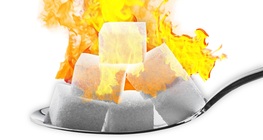
Catalysts can facilitate or support the process of reactions that otherwise would not occur.
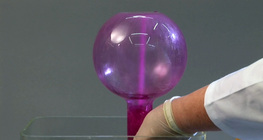
The dissolution process causes a drop in pressure, which draws water into the flask, creating a fountain-like effect.
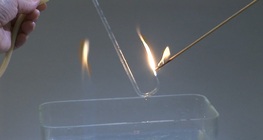
A compound produced from calcium carbide and water, acetylene burns with a sooty flame.
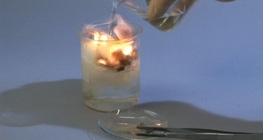
When acetylene is combined with bleach, a vigorous addition reaction involving flames occurs.

The largest endemic European hornet species, characterised by its venomous sting and its taste for other insects.

Simians are vertebrates in the order Primates, commonly known as monkeys and apes.

Let's learn more about the fascinating history of computing, which has gone through an unprecedented rapid evolution.

Let's learn more about the fascinating history of computing, which has gone through an unprecedented rapid evolution.
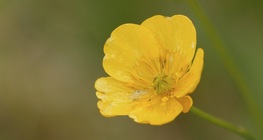
These golden-yellow, though poisonous, flowers turn damp meadows into a sea of yellow.
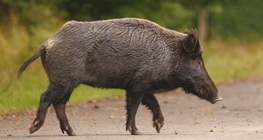
A common inhabitant of forests; it is the ancestor of the domesticated pig.
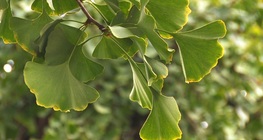
The ginkgo biloba is an ancient tree species that has been around since prehistoric times.
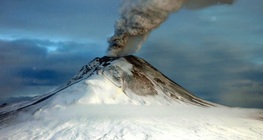
Plate tectonics is a theory dealing with the movement of plates.

Examination of filamentous plant and fungus species with an optical microscope.

Slovenia is a former Yugoslav successor state inhabited by merely 2 million people. Despite its size, it offers a diverse range of landscapes and climates.
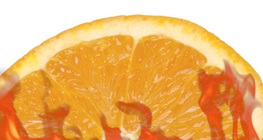
When the essential oil from the peel touches the candle flame, it burns and creates a ball of fire.
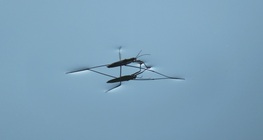
A fascinating aquatic insect species that is able to 'walk' on the water using surface tension.
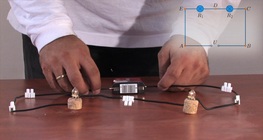
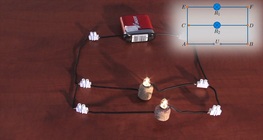
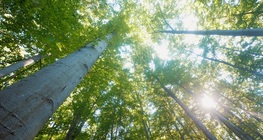
The term beech is used for several species of trees growing from North America to Asia, i.e. all over the northern temperate zone.
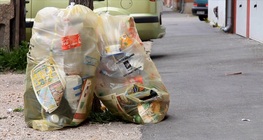
Have you ever given any thought to what exactly happens to the waste you throw in the bin?
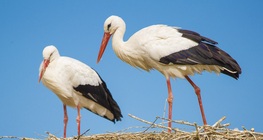
The white stork is one of the best-known migratory birds in Europe. But how much do you know about these birds?

Let’s observe the effect of the amylase enzyme on a starch solution in the presence of Lugol’s solution.

In this video, you can see how the water, coloured with eosin solution, moves upwards in a carnation.
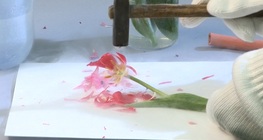
When objects, flexible at room temperature, are frozen to –196 °C, they become brittle.